
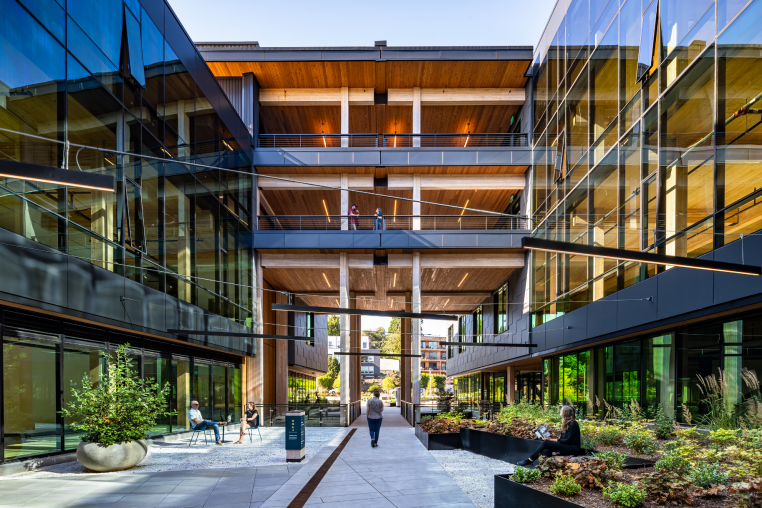
Northlake Commons, Seattle, WA | Swinerton |
Photo Credit: Meghan Montgomery
Sincerely,
Cees de Jager, President & CEO
Dear Investors,
In 2025, the SLB and its funded programs supported the conversion of 1,536 projects, representing 62 million square feet of construction and generating 1.5 BBF of incremental demand. These results were achieved in a challenging environment for multifamily and non-residential construction, and they underscore both the resilience of the SLB’s programs and the growing competitiveness of lumber-based building systems. The SLB delivered solid results and strengthened the foundation for continued diversification of U.S. softwood lumber demand.
As we look ahead to 2026 and beyond, disciplined focus is essential. The SLB’s “From Niche to Mainstream” strategy charts a clear roadmap to 2.9 BBF of incremental annual lumber demand by 2035. Reaching that goal will require bold action in the markets and building types where the value proposition for lumber-based systems can deliver near-term conversions. It will also take disciplined execution to reduce adoption friction, and demonstration of visible proof points that shift how decision-makers perceive wood construction.
A central element of the 2026 plan is shifting from a national approach to a targeted, metro-level strategy. Building on early success with the Accelerator Cities Program, the SLB is developing a replicable city-level model that aligns code implementation, developer and municipality engagement, workforce readiness, and coordinated partner activity. This concentrated approach lets the SLB direct finite resources to the metros where conversion opportunities are strongest and build a playbook that can scale to additional markets over time.
AI is rapidly reshaping how building professionals research materials, evaluate systems, and make specification decisions. This creates both an opportunity and an imperative for the SLB. On the operational side, AI and digital tools allow the SLB and its programs to do more with existing resources: accelerating content development, personalizing outreach, and improving the targeting of high-potential leads and projects. Equally important, as architects and engineers increasingly discover and compare building materials through AI-driven search and recommendation platforms, the SLB must ensure that lumber-based systems are accurately and competitively represented in these channels. Getting this right is not optional; it is a competitive necessity.
To ensure this work translates into measurable progress, the SLB will develop a core set of shared key performance indicators across all programs to track market share growth and cost per conversion. This shared visibility will help the SLB evaluate returns, identify obstacles sooner, and build a clearer line of sight between program activity and incremental lumber demand.
Partnerships remain one of the SLB’s most powerful levers for accelerating market confidence and reducing friction. In 2026, the SLB will deepen mutually beneficial relationships with high-impact partners while also exploring non-traditional alliances. Immediate priorities include expanding workforce training pathways, partnering on local code implementation, and addressing documented barriers around insurance and financing that continue to constrain adoption in key segments.
The 2.9 BBF of incremental annual demand target by 2035 is ambitious, but achievable. The SLB has the strategy, the resources, and the discipline to get there. I am grateful for the leadership of the Board, the dedication of the SLB team, and the close collaboration with our funded programs that make this work possible.
We welcome your perspectives and experience, whether by email, phone, or at an upcoming meeting. The SLB is guided by the priorities of the lumber producers that fund it, and your engagement helps translate those priorities into tangible results.